
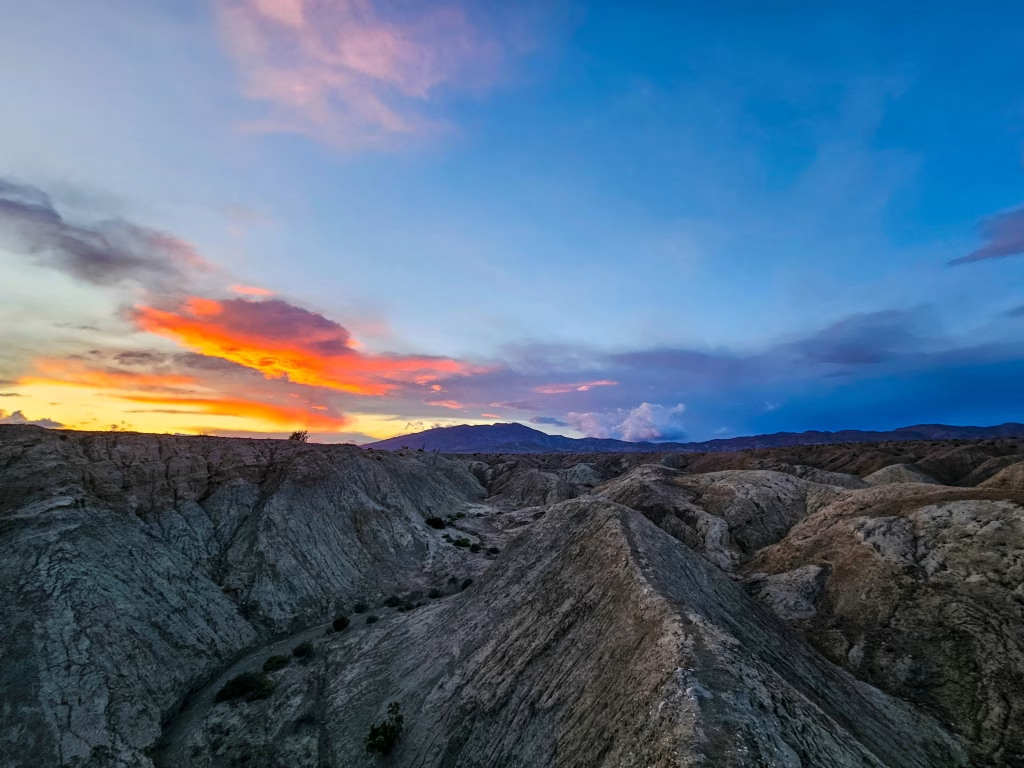
With Badlands, slot canyons, endless sky, and true off-grid freedom, Anza-Borrego Desert State Park is one of the best places in the Southwest for legal dispersed desert camping.
In a region where reservations, permits, and crowded campgrounds are the norm, Anza-Borrego offers something increasingly rare: space to choose your own campsite and experience the desert on your own terms.
For campers like me coming from Phoenix, it’s an ideal long weekend destination. In under five hours, you can trade city noise for wide-open washes, sculpted desert terrain, and one of the most unique hikes in Southern California—the Arroyo Tapiado Mud Caves.
If you’re based in Southern California, it’s even closer. And if you’re road-tripping across the Southwest, it’s one of the most unique desert stops you can build into your route.
This guide covers everything you need to know to plan a dispersed camping trip to Anza-Borrego, including what the park is like, why it’s worth visiting, when to go, how to get there, where to camp, and how to do it safely.
Anza-Borrego at a Glance
Best for: campers craving desert solitude, dispersed camping, and a mud cave adventure
Vibe: remote, quiet, stark, and beautifully rugged
Road access: usually manageable in dry conditions, but worth checking before your trip
Best vehicle: higher clearance is the more comfortable choice
Amenities: minimal to none, so plan to be fully self-sufficient
Cell service: limited and unreliable in many areas
Best season: cooler months
Ideal trip length: long weekend
Highlight: Arroyo Tapiado mud caves and dispersed sides in badland washes
Best for travelers who: prefer wild-feeling campsites over polished campground convenience
Table of Contents
- Why Camp in Anza-Borrego Desert State Park?
- About Anza-Borrego Desert State Park
- Getting There & Essential Logistics
- Dispersed Camping Rules in Anza-Borrego
- When to Go: Best Seasons for Anza-Borrego Camping
- Resources
- Anza-Borrego Camping – Lay of the Land
- Where to Find Dispersed Camping in Anza-Borrego
- My Dispersed Campsite Near Arroyo Tapiado
- Hiking In Anza-Borrego: Arroyo Tapiado Mud Caves
- Harsh Realities to Plan For with Anza-Borrego Camping
- How to Structure a Long Weekend in Anza-Borrego
- Meals That Work Well for Anza-Borrego Camping
- FAQ: Anza-Borrego Dispersed Camping
Why Camp in Anza-Borrego Desert State Park?
The experience here goes well beyond traditional campground camping. It’s for people who want space, silence, and the kind of landscape that doesn’t look real until you’re standing in it. Here’s what makes it worth the drive:
- Even on prime weekends, real isolation is possible: If you’re willing to drive deeper into the washes and choose your site intentionally, it’s very unlikely you’ll see other people.
- During our long weekend trip in March, we saw only a couple vehicles pass our campsite in three days and crossed paths with just a single group at the Mud Caves. Outside of that, it felt like true no-man’s-land.
- Desert wash camping: Sheltered, flat campsites in washes that feel tucked away from the world.
- Epic night skies: Minimal light pollution means stunning stargazing.
- Otherworldly terrain: Badlands, slot canyons, mud caves, and surreal geologic textures.
- A true reset: No infrastructure, no crowds, no noise—just desert quiet.
About Anza-Borrego Desert State Park
Anza-Borrego Desert State Park is the largest state park in California. The park spans a massive portion of the Colorado Desert and includes badlands, palm oases, slot canyons, open basins, and rugged mountain backdrops.
Key characteristics of the park:
- Size: ~600,000+ acres (larger than some U.S. national parks)
- Landscape: Badlands, desert washes, ocotillo forests, mudstone and siltstone canyons
- Elevation: Ranges from near sea level to several thousand feet in surrounding foothills
- Climate: True desert conditions: mild to warm winters and spring days, dramatic temperature swings, and extreme summer heat.
- Camping model: Mix of developed campgrounds and extensive areas that allow dispersed camping
- Wildlife: Desert bighorn sheep, coyotes, foxes, reptiles, and seasonal wildflowers after wet winters
Because of its size and minimal development, Anza-Borrego offers a level of solitude that’s increasingly rare in Southern California, especially if you’re willing to camp outside established campgrounds.
Getting There & Essential Logistics
From Phoenix
Anza-Borrego is about 4 hours 45 minutes from Phoenix depending on traffic.
A common, reliable route is:
- I-10 West
- I-8 West
- Connect toward CA-78 / Borrego Springs
From San Diego
- CA-78 East through Julian into Borrego Springs
From Los Angeles / Inland Empire
- I-10 or I-15 with a connection to CA-78
Gas, Ice & Firewood (Plan This Carefully)
- Fuel up before leaving major highways. Services are extremely limited once you’re off pavement.
- If approaching from the I-8 direction, the last reliable gas stop is near Ocotillo. After that, you’re committing to desert driving with very few services.
- If approaching through Borrego Springs, top off gas and ice there before heading into dirt roads. Borrego Springs has gas stations, small grocery stores, and basic supplies — it’s your last dependable resupply point before going deeper into the park.
- Firewood is not available inside the park. Bring your own.
- If you need more, the Chevron in Ocotillo sometimes carries bundled firewood. If they’re out, they may direct you to another stop farther west along I-8 (about 20 minutes away) where bundles are more consistently stocked.
Navigation & Road Conditions
- Download offline maps and/or bring a separate GPS. Cell service drops quickly outside Borrego Springs, and navigation becomes tricky in the washes even with map assistance.
- Pay attention to landmarks when traveling to and from your site. Washes look deceptively similar, and it’s easy to end up one over and feel turned around.
- Pay attention to landmarks when traveling to and from your site. Washes look deceptively similar, and it’s easy to end up one over and feel turned around.
- Dirt roads can be slow and conditions change frequently — build in buffer time for your arrival.
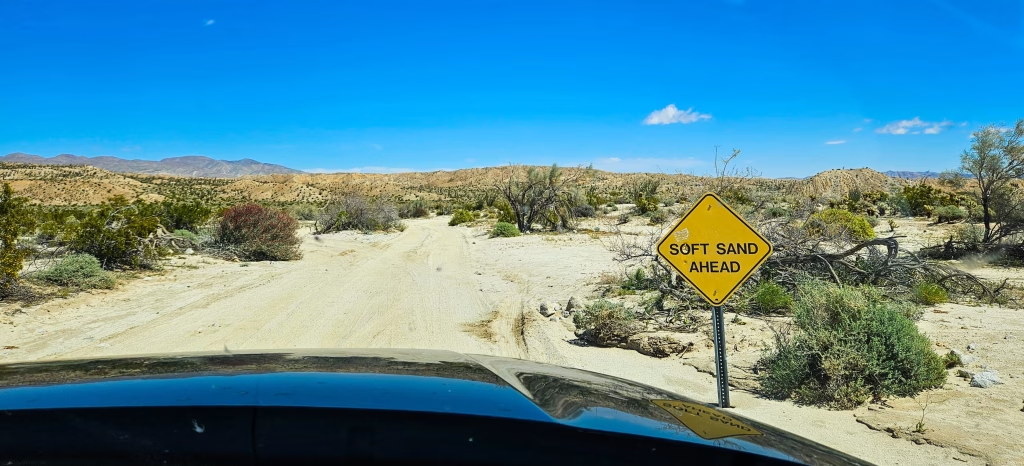
- High-clearance 4×4 is strongly recommended. Many access roads and washes involve deep, soft sand where 2WD vehicles commonly get stuck.
- If driving in sand, airing down tires can significantly improve traction (only if you know how to do this safely and can properly reinflate afterward).
Dispersed Camping Rules in Anza-Borrego
Dispersed camping is legal and free in much of Anza-Borrego, but it is regulated. These rules are strictly enforced to protect the desert and reduce risk.
- Camp at least one vehicle length (≈20 ft) from the center of a wash
- Camp at least one vehicle length off the road
- Do not block washes, roads, or travel corridors
- No camping within 100 feet of water sources
- Ground fires are prohibited; always check current restrictions
- (Portable raised fire pans or contained fire pits may be allowed depending on conditions—see cooking section below.)
- Use previously disturbed sites whenever possible
- Pack out all trash and waste
There are no amenities and no signage marking sites. Full self-sufficiency is required.
When to Go: Best Seasons for Anza-Borrego Camping
Timing matters here more than it does in many dispersed camping destinations.
November–March (Best): Cooler days, cold nights, and the safest window for hiking and camping.
April (Shoulder season): Still doable, but afternoons warm up quickly.
May–September (Avoid): Extreme heat makes camping and hiking unsafe for most people.
Weather notes:
- Day/night swings of 30–40°F are common in cooler seasons.
- Wind can be intense in exposed areas.
- Rain anywhere nearby can trigger flash flooding in washes.
Always check forecasts for Borrego Springs and surrounding mountains, not just your immediate campsite.
Resources
Before you head out, check these for alerts and restrictions as well as more information about the area.
- Anza-Borrego Desert State Park Official Website
- Anza-Borrego Foundation
- Trail reference for Arroyo Tapiado Mud Caves
Anza-Borrego Camping – Lay of the Land
Anza-Borrego is a desert park built around washes, badlands, and wide-open basins. The dispersed camping experience typically centers on dirt road access and wash pullouts—flat, previously disturbed areas where you can set up and spread out.
While this guide focuses on dispersed camping, the park does offer developed campgrounds for those who prefer amenities. These are primarily located near Borrego Springs and along paved corridors, and typically include vault toilets and designated sites.
They can be a good option during windy conditions or for campers new to desert travel, but they lack the privacy and flexibility that dispersed camping provides.
A few realities to know:
- Washes are the campsite areas. Most dispersed camping happens in broad washes branching off maintained dirt roads.
- Shelter matters. Canyons and wash banks can block wind and make camp life dramatically more comfortable.
- Exposure is a trade-off. Higher ground can deliver incredible views, but often at the cost of relentless wind.
Where to Find Dispersed Camping in Anza-Borrego
How to Find a Good Dispersed Campsite
Most good sites share the same traits:
- Flat, compacted ground
- Evidence of previous use (tire tracks, cleared pads, fire ring)
- Enough space to turn around without digging ruts
- Natural wind protection from canyon walls or banks
Avoid narrow or steep-sided washes—these are higher-risk flash flood corridors.
High Camps vs Low Campsites
- High camps (mesas/ridges): Incredible views, but often extremely windy
- Lower camps (washes): More sheltered, quieter, and better for tents and cooking
In Anza-Borrego, protection from wind almost always outweighs elevation.
Click the pins on the map to view the campsite location and Mud Caves access point. Full details and photos are listed below.
My Dispersed Campsite Near Arroyo Tapiado
For this trip, I dispersed camped in a wide wash past the Arroyo Tapiado Mud Caves, choosing a spot that offered shelter, space, and easy hiking access.
Campsite Coordinates:
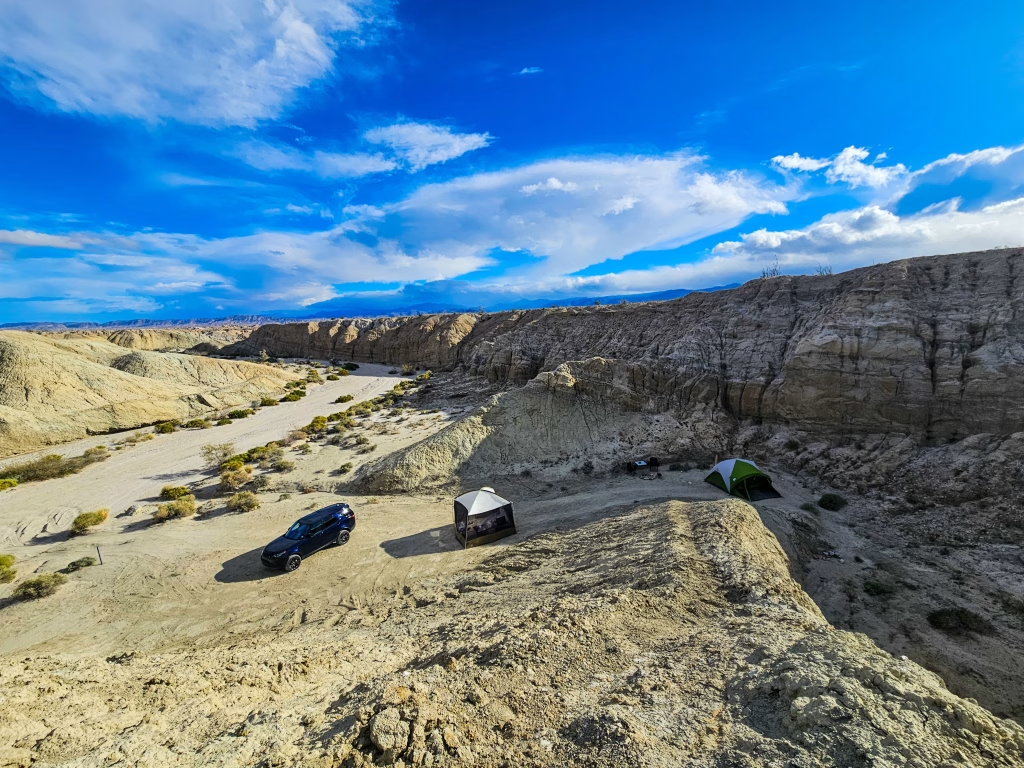
This area felt exceptionally quiet throughout the day and worked well as a basecamp for exploring Arroyo Tapiado. The site itself ended up being one of the true highlights of the park.
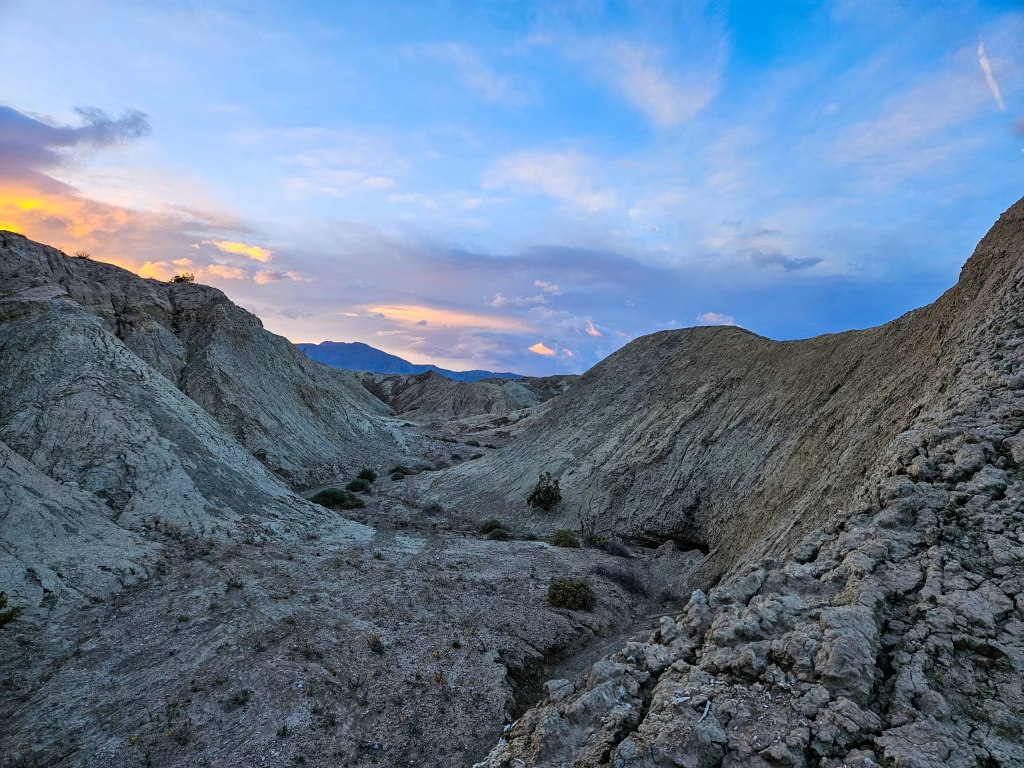
We had a large clearing set slightly off the main wash for added privacy, plus a short walk up a ridge behind camp that delivered sweeping views across the badlands. It became our sunset spot each evening!
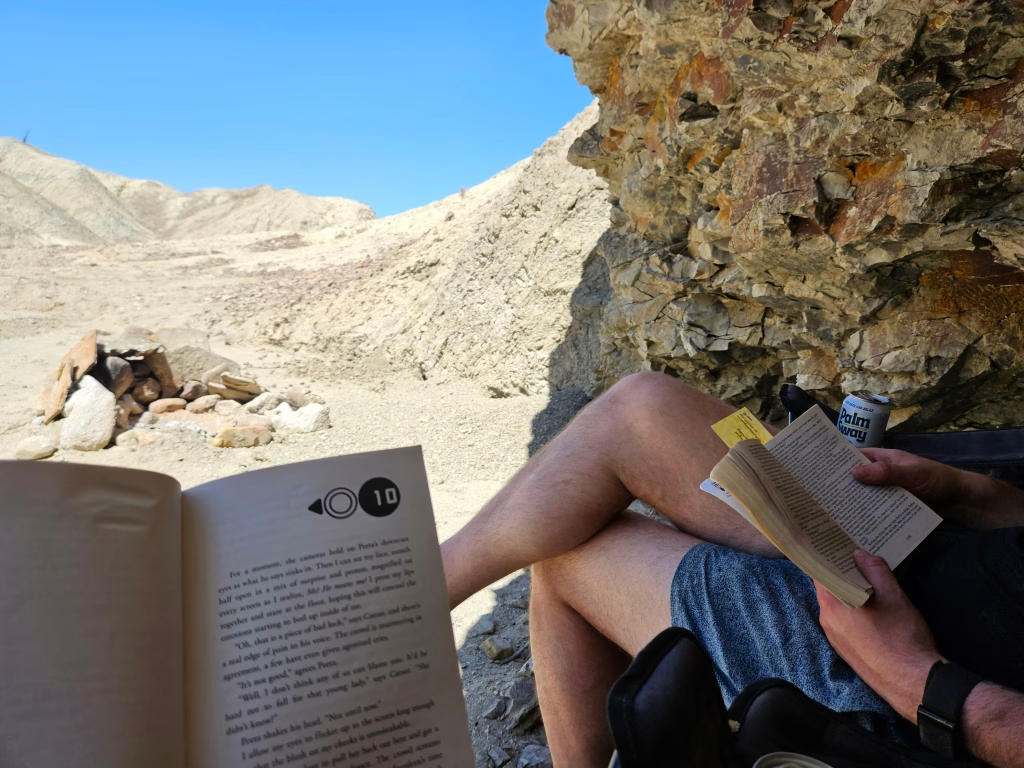
There was also a tucked-away path leading deeper into a quieter section of wash, where a small cave provided natural shade during peak sun hours, an ideal place to read and reset when we weren’t out hiking.
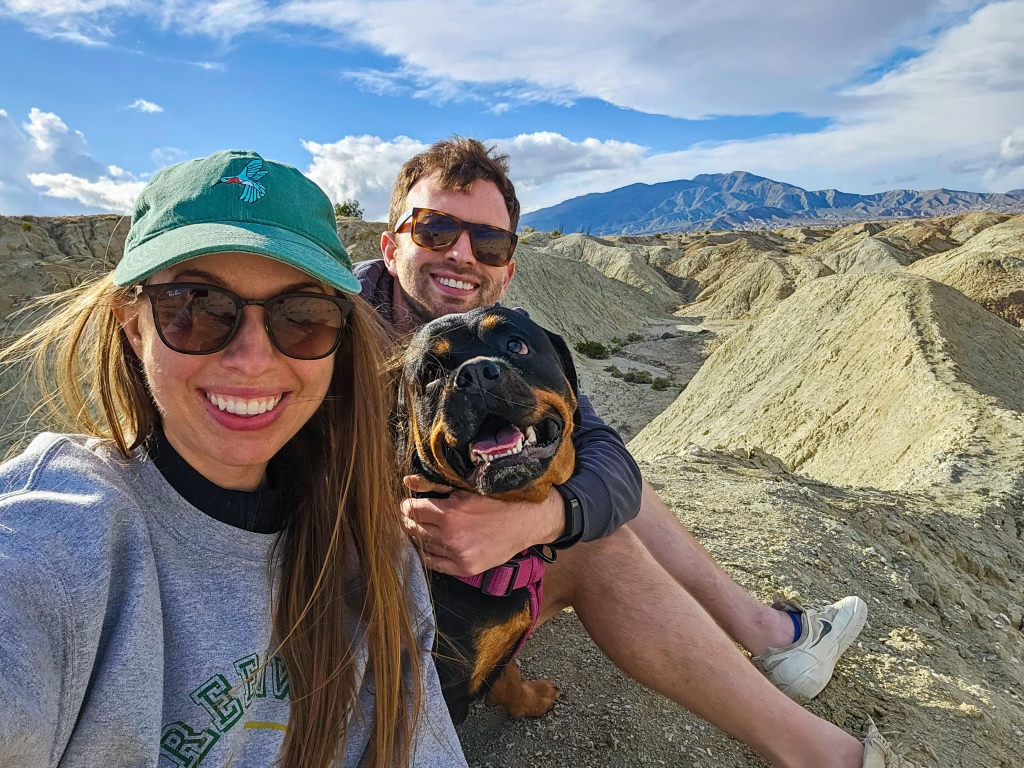
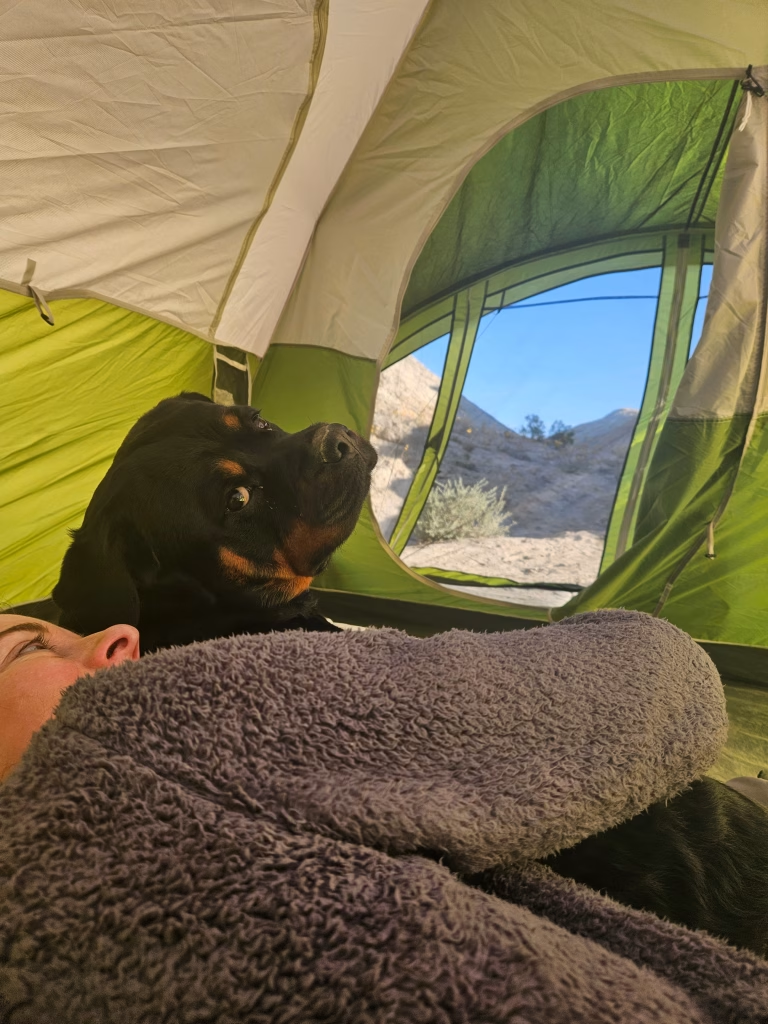
We always look for dispersed campsites with multiple zones to enjoy — space to cook, space to explore, space to unwind, and of course, room for our Rottie, Sora, to roam. That’s harder to find in exposed desert terrain, but this site checked every box!
Hiking In Anza-Borrego: Arroyo Tapiado Mud Caves
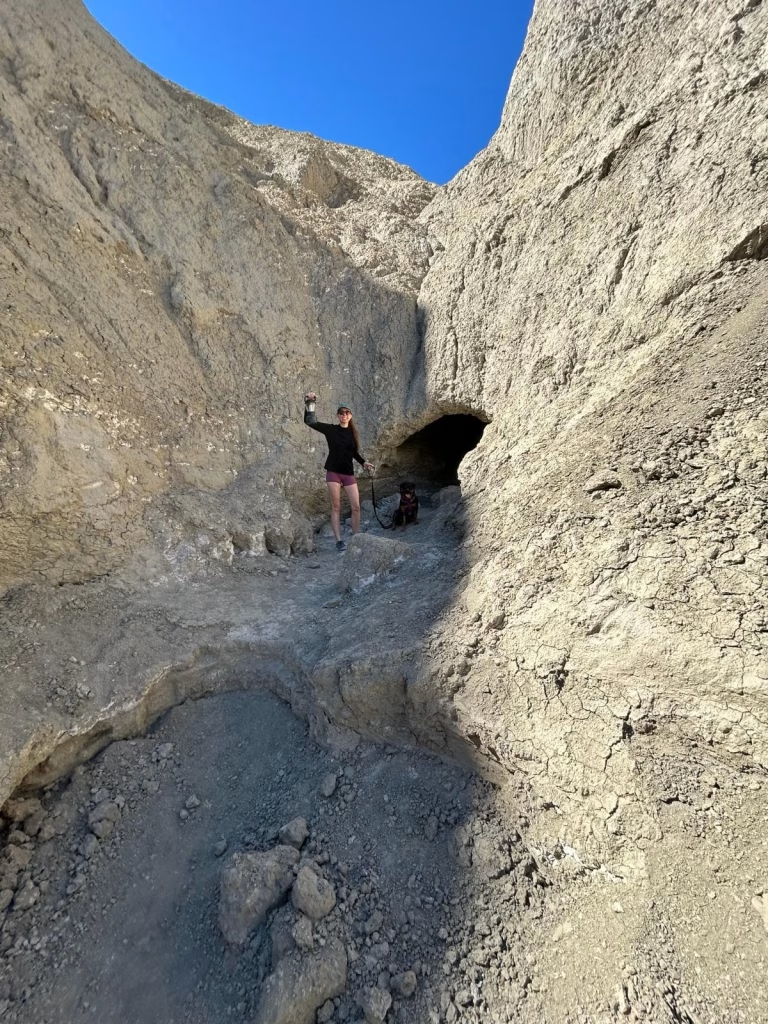
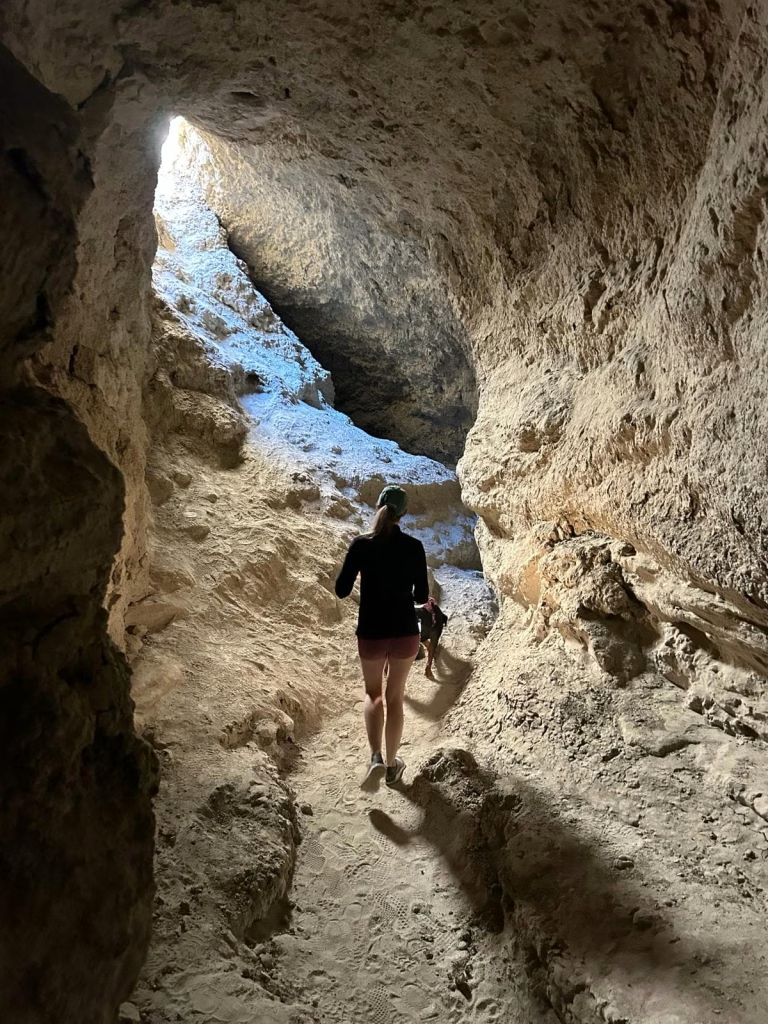
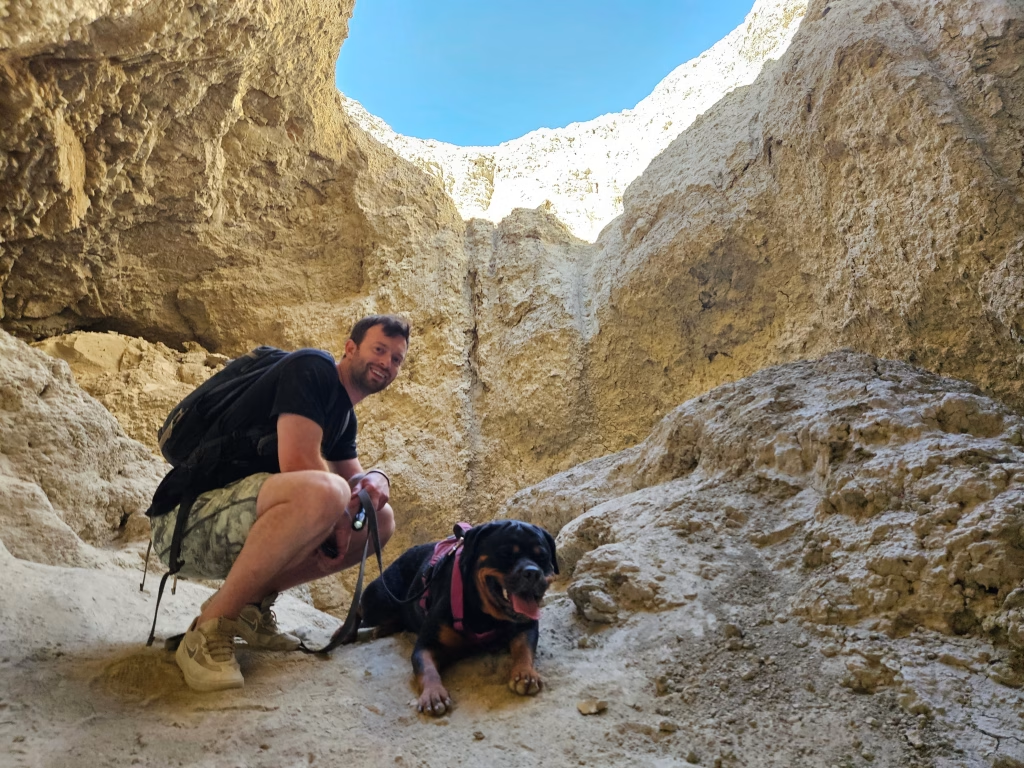
The Arroyo Tapiado Mud Caves are one of the most unique hikes in Anza-Borrego Desert State Park. Unlike traditional slot canyons carved through sandstone, these caves are formed from hardened mud and siltstone, creating narrow passageways and sculpted canyon walls.
Several sections include installed wooden ladders to help hikers navigate vertical drops and tight transitions. Even if you’re used to desert landscapes like we are, this hike really is something unique and special!
Mud Caves Coordinates:
These coordinates point to the Arroyo Tapiado Mud Caves access point. The cave entrance is a small opening on the left with a large clearing directly across for parking.
- Hike Distance: ~3–4 miles round trip (route dependent)
- Difficulty: Moderate
- Navigation: Informal routes with light scrambling and ladders
Safety Notes
- Do not enter if rain is forecast anywhere in the surrounding mountains or upstream drainage areas.
- Flash flooding is a serious hazard, even from distant storms
- Flash flooding is a serious hazard, even from distant storms
- Wear sturdy footwear with good traction
- Move carefully through tight sections and ladder drops
- Bring a quality flashlight or headlamp for darker areas within the caves — a cell phone light is not sufficient.
- Protective headgear (such as a lightweight climbing helmet) can be a plus, especially in low-clearance areas, narrow squeezes, or when navigating ladders and uneven terrain
Best Time to Hike
Early mornings can be quite chilly inside the caves, especially in cooler months. Mid-morning often provides the most comfortable temperatures, while late afternoon can be ideal for avoiding crowds.
Weekdays are significantly quieter if your schedule allows.
Keep in mind that you’ll enter and exit the caves throughout the hike, so desert heat is still a factor, especially later in the day.
We started our hike around 10:30 a.m. on the Monday of a long weekend and didn’t encounter another group until we were nearly back at the trailhead, so that seemed to be the sweet spot!
Harsh Realities to Plan For with Anza-Borrego Camping
Anza-Borrego is stunning, but it’s also one of the most exposed and unforgiving dispersed camping environments I’ve experienced. Planning for these realities ahead of time makes the difference between an incredible trip and a miserable one.
- No shade, anywhere.
There are no trees and no consistent overhead canopy. While wash walls, canyon edges, and small caves can provide pockets of shade at certain times of day (we found both), you can’t rely on stable, all-day coverage the way you might in a forest.- Shade shifts constantly as the sun moves, and much of the terrain offers very little relief from direct exposure. Shade structures, wide-brim hats, long sleeves, and intentional midday downtime planning are essential.
- Sand gets everywhere.
The ground is soft, fine, and constantly shifting. Expect sand in your tent, your cooking gear, your clothes, and your food setup unless everything is actively covered. Keep bags zipped, lids closed, and gear protected whenever possible. - Tent staking is a challenge.
Sand-specific stakes sound ideal, but they don’t always hold well here. What worked better was using standard tent stakes and weighting them with large rocks to keep tension on the lines. Plan for extra time at setup and bring longer guylines if you have them. - Wind + sand = abrasion.
Even light wind can kick up enough sand to make exposed skin uncomfortable. Lightweight, covering clothing (long sleeves, pants, neck coverage) is far more practical than sunscreen alone.
- Water needs are higher than you think.
There are no reliable water sources in Anza-Borrego. Plan to bring significantly more water than you would for a forest or mountain dispersed trip — for drinking, cooking, cleaning, and especially if you’re bringing a dog.- Desert air is dry, wind increases dehydration, and hiking in and out of caves still exposes you to heat between sections. We always pack extra and never plan to stretch our supply. Running low on water in this environment isn’t uncomfortable — it’s dangerous.
- This is not a “wing it” location.
Between sun exposure, wind, sand, and the lack of amenities, Anza-Borrego demands more intentional planning than many forest or mountain dispersed camps. The payoff is worth it, but only if you’re prepared.
Desert Dispersed Camping Etiquette
- Pack out everything. Desert trash lingers for a long time.
- Keep noise low. Sound carries dramatically across open washes and basins.
- Stay on durable surfaces and previously disturbed areas whenever possible.
- Respect seasonal closures and current restrictions.
How to Structure a Long Weekend in Anza-Borrego
Anza-Borrego gives you options. You can fill your days with hiking and exploration or build in real downtime. Both work here if you plan around heat, wind, and exposure.
Arrival + Camp Setup
Arrive with plenty of daylight to scout a wide, established wash and choose a sheltered site. In this park, wind protection matters more than elevation or views.
Once camp is set, use the remaining light to explore nearby badlands, scout trail access, or simply watch how the desert shifts at sunset and enjoy your first dinner under the stars.
If you plan to fire cook, use a raised fire pan or portable fire pit with a protective base, keeping flames fully contained and off the ground. This allows you to cook over live fire while protecting fragile desert soil. Always check current restrictions before your trip.

Explore Early, Adapt as the Day Warms
Early to mid mornings are ideal for hiking. The Arroyo Tapiado Mud Caves are especially enjoyable before heat and crowds build, and there are countless other washes and badland formations worth exploring.
Midday requires strategy. Shade is limited and the sun can be intense, but thoughtful site selection helps. Our campsite had a short walk to a shaded canyon edge where we could rest and read during the hottest part of the day.
Depending on your pace, midday can also be a good time to:
- Replenish ice
- Grab additional firewood
- Refuel if needed
- Reset camp and secure gear against wind
Some visitors will choose to push deeper into exploration during the day. Others will treat midday as recovery time before heading back out in the late afternoon. Both approaches work—planning is what matters.
Evenings in the Desert
Evenings are when Anza-Borrego feels largest and quietest. Wind often settles, temperatures drop, and the sky becomes the main event.
This is the ideal window for cooking, gathering around the fire, and stargazing without interruption.
Meals That Work Well for Anza-Borrego Camping
Because of wind, sand, and exposure, this location favors meals that are:
- Prepped ahead
- Efficient to cook
- Low-mess
If you’re fire cooking, use a raised fire pan or portable fire pit with a protective base and build a small wind barrier using natural rocks or a wind guard to keep the flame controlled and steady.
Breakfast:
Mornings in Anza-Borrego can be a good window for cooking before the sun gets high, or an ideal time for a quick grab-and-go breakfast with coffee to start the day early:
- Bagels with cream cheese and fresh fruit
- Pre-made dishes that can be enjoyed cold like chia seed pudding or that give you a hold or cold option like veggie egg bites
- Campfire toast or pancakes with assorted fruit and crunchy toppings


Lunch:
Midday heat and sand make elaborate cooking less appealing. Easy cold items and pre-prepped components work best:
- Simple Sandwiches or wraps
- Grain bowls or pasta salads assembled from chilled ingredients
- Leftover meats from dinner on pita


Appetizers + Drinks :
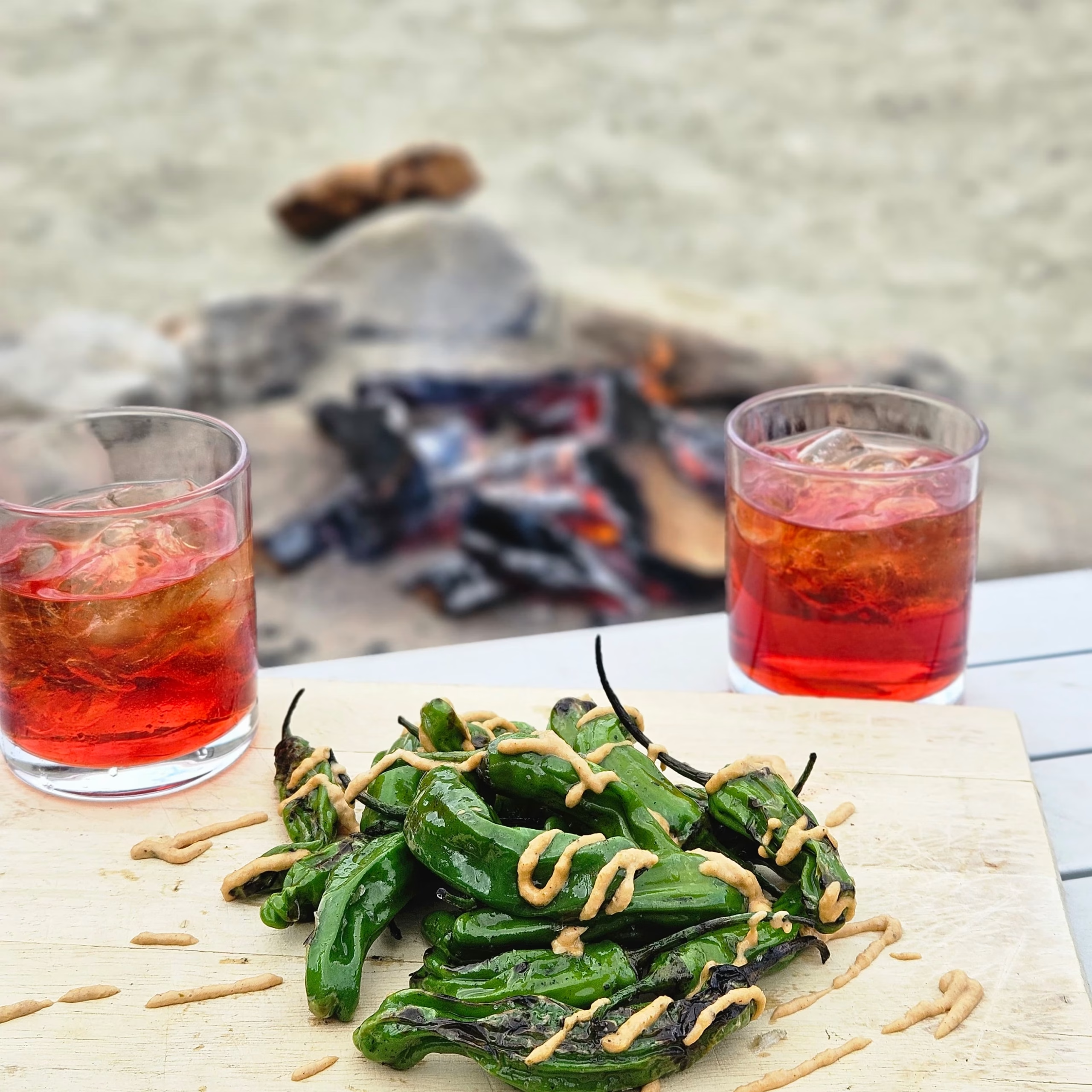
It can be so nice to start enjoying that time by the fire the second the sun goes behind the canyon wall or have a refreshing drink mid-day. Ready made cocktails and quick appetizers are ideal:
- One ingredient appetizers cooked right over the fire like roasted shishito peppers
- Pre-batched cocktails ready to pour over ice from your cooler
- Wine for the cooler desert evening


Dinner:
Evenings, especially as the sun begins to drop, are the best cooking window of the day. Wind can still be a factor, so quick-cooking, and fire-friendly/camp stove meals work best:
- Campfire smashburgers cooked on a steel plate over a raised fire pit
- Marinated proteins that cook quickly over a raised fire pit
- Foil packet meals (when using proper ground protection)
- One-pot dinners that only require a quick heat and serve



Dessert
If you want to stretch out that fire time star gazing a little longer, dessert should be simple, contained, and low-fuss in windy desert conditions. Pre-assembled or easy fire-finished sweets work best:
- Individual jar desserts
- Quick fire-finished treats like s’mores


Departure + Optional Stop: Salton Sea & Bombay Beach
When it’s time to break camp and head home, consider stretching the weekend just a little longer.
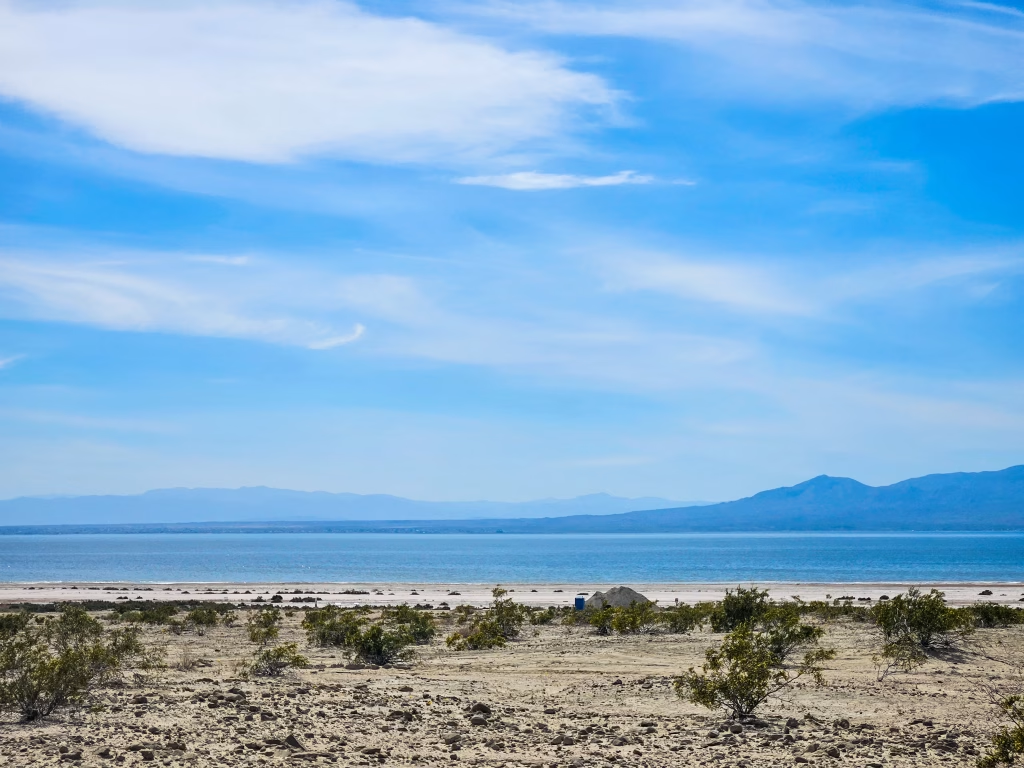
On your way out, a detour toward the Salton Sea and Bombay Beach shifts the landscape from open desert washes to salt flats and art-studded shoreline, a completely different kind of desert experience.
If you’re ready for a sit-down meal after a weekend of camp cooking, small local spots near Bombay Beach like the Ski Inn provide a memorable contrast before returning to highway miles. Their patio is also dog friendly!
We always try to plan a unique lunch stop in a unique place to explore to make the drive home day just as fun and this area was a cool stop to check out for sure!
FAQ: Anza-Borrego Dispersed Camping
Yes, dispersed camping is permitted in designated areas when regulations are followed.
No permit is required.
Dispersed camping is allowed in many areas of the park, primarily in washes and along designated dirt roads. Camp at least one vehicle length from the center of washes and roads, and use previously disturbed sites whenever possible.
Ground fires are prohibited. Raised fire pans or portable fire pits may be allowed depending on current restrictions. Always check official guidance before your trip.
Yes. At just under five hours, it’s ideal for a 2–3 night trip.
Dogs are allowed on roads and in developed areas, but not on trails.
Why Anza-Borrego Camping Is Worth It
Anza-Borrego isn’t convenient, shaded, or easy.
It’s wide. It’s exposed. And if you choose your site well, it’s genuinely quiet.
There are few places in the Southwest where you can camp in open desert washes, hike sculpted mud caves in the morning, and end the day under a sky that feels uninterrupted in every direction.
If you’re comfortable planning ahead and managing the elements, this is one of the most rewarding desert camping experiences you can have!
Time for Your Adventure
Have you dispersed camped in Anza-Borrego or found another hidden desert wash you love? Share your experience in the comments or tag me on social. I’d love to see your adventure.
If you have a trip in the works, save this guide and let me know how it goes!
@thedisperseddietitian #thedisperseddietitian
Additional Resources
If you love off-grid escapes that feel truly undiscovered, take a look at some of my other favorite hidden gems and food-forward camping resources:


For all of our hidden campsites and tasty recipes for your next elevated outdoor escape check out our entire blog!