
Mogollon Rim camping is one of the best ways to get out of the Phoenix heat without sacrificing scenery, privacy, or things to do. If the Rim feels too popular or too crowded on paper, I get it. That’s exactly why it wasn’t high on my list at first either.
What changed my mind was realizing how much the experience depends on where you look. With a little extra scouting, it’s possible to find quiet dispersed campsites, low-traffic forest roads, dramatic overlooks, nearby lakes, and even surprisingly peaceful hikes without feeling like you’re on top of everyone else.
This guide covers what the Mogollon Rim is like, when to go, how to find dispersed camping in the area, where we camped, and how to build a long weekend around scenic drives, nearby lakes, and a quiet hike at Bear Canyon Lake.
Mogollon Rim Camping at a Glance
Best for: forested dispersed camping, dramatic rim views, lakeside hiking, and cooler weather escapes from Phoenix
Vibe: high-country, scenic, spacious, and more flexible than it first appears
Road access: manageable in many areas, but the best dispersed options often take more scouting on forest roads
Best vehicle: higher clearance is helpful if you want more secluded sites
Amenities: very limited outside of campgrounds, so plan to be self-sufficient
Cell service: limited to intermittent depending on where you camp
Best season: late spring through early fall
Ideal trip length: three to four nights
Highlight: quiet dispersed campsites with big views, peaceful lakes, and the possibility of wild horse sightings
Best for travelers who: want a flexible mix of relaxing at camp, scenic drives, lake time, and hiking without defaulting to Arizona’s most obvious spots
Table of Contents
- Why Camp on the Mogollon Rim?
- About the Mogollon Rim
- Getting There & Essential Logistics
- Dispersed Camping Rules on the Mogollon Rim
- When to Go: Best Seasons for Mogollon Rim Camping
- Where to Find Dispersed Camping on the Mogollon Rim
- My Dispersed Campsite on the Mogollon Rim
- How to Spend a Long Weekend on the Mogollon Rim
- Meals That Work Well for Mogollon Rim Camping
- FAQ: Mogollon Rim Camping
Why Camp on the Mogollon Rim?
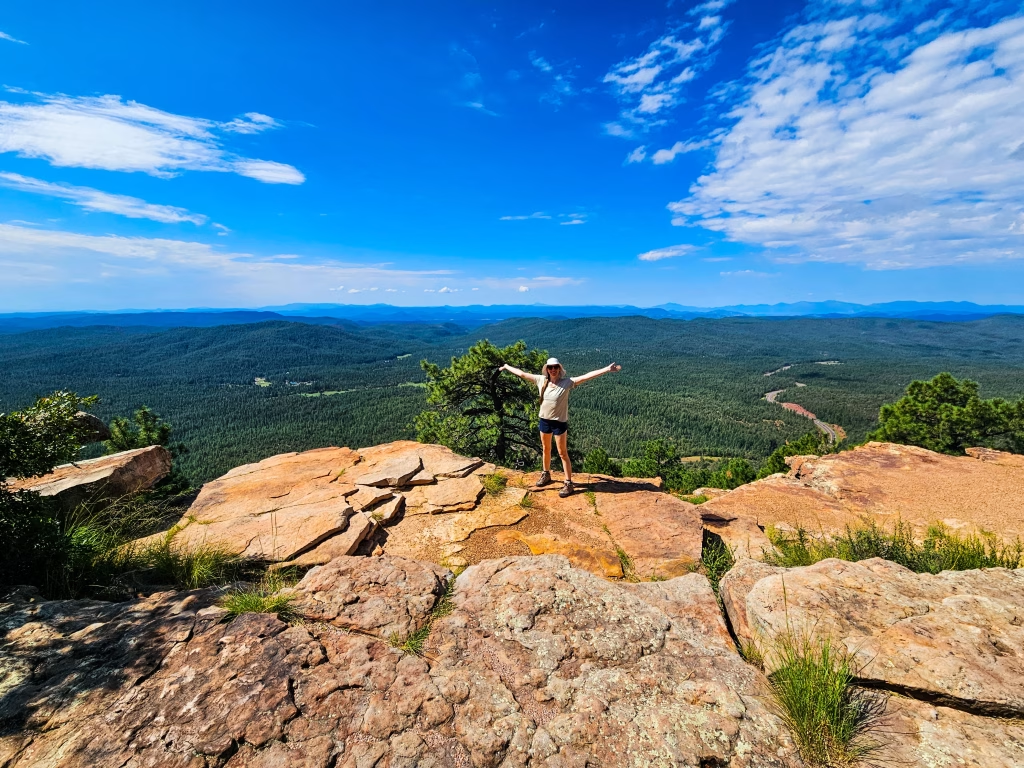
The Mogollon Rim works well for campers who want cooler weather, forested scenery, and more variety than a trip built around a campsite alone. It gives you a mix of big views, pine forest, nearby lakes, and enough room to shape the weekend around either exploring or slowing down.
Why the Mogollon Rim is worth it:
- It’s an easy high-country escape from Phoenix, especially if you want a change from desert camping.
- The scenery feels varied, with rim overlooks, lakes, forest roads, and wildlife all in the mix.
- There are lots of dispersed camping possibilities, so you have a better chance of finding a site that matches your style.
- It works well for a fuller long weekend, with hiking, scenic drives, and lakes to build around camp time.
- Firewood was easy to find in the area, which made campfires and fire-based cooking much more realistic than on a desert trip.
- You can still find quieter pockets, especially if you’re willing to scout instead of stopping at the first obvious area.
About the Mogollon Rim
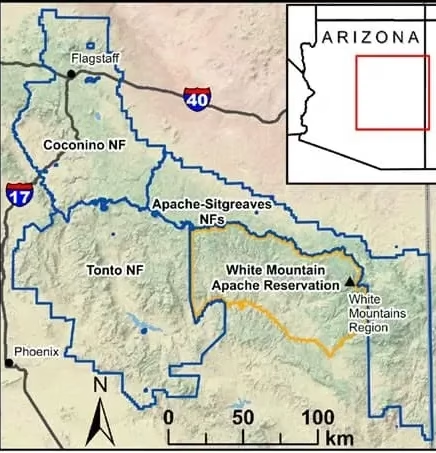
The Mogollon Rim is a long escarpment that forms the southern edge of Arizona’s Colorado Plateau. It’s one of the state’s defining high-country landscapes, and it stretches across multiple national forest jurisdictions.
Key characteristics of the Mogollon Rim:
- Landscape: a long, forested escarpment with dramatic overlooks, lakes, and pine-covered high country.
- Elevation: much of the Rim sits around 7,000 feet, with the escarpment ranging roughly from 5,000 to 7,000 feet in elevation.
- Geography: it marks the southern edge of the Colorado Plateau and drops as much as 2,000 feet in some areas.
- Forest coverage: the eastern Rim is largely within Apache-Sitgreaves National Forests, while the western portion is associated with Coconino National Forest.
- Vegetation: the Rim is known for extensive ponderosa pine forest, including some of the largest stands of ponderosa pine in the United States.
- Wildlife: elk, deer, raptors, and in some areas even wild horses are part of the Mogollon Rim landscape.
Getting There & Essential Logistics
The Mogollon Rim is a very manageable drive from Phoenix, and for this trip I came in on Highway 260 heading east out of Payson. That gives you access to several different parts of the Rim, but it’s worth knowing that not every road leads to the same kind of camping experience.
Logistics to know before you go:
- Drive time from Phoenix: usually around 2.5 to 3.5 hours depending on your target area
- Popular access area: Rim Road / Forest Road 300 near the Mogollon Rim Visitor Center
- Cell service: limited to intermittent, so download offline maps and route info before you lose coverage
- Road conditions: can change with storms, closures, and seasonal weather, so check conditions close to departure
- Vehicle: some dispersed sites are reachable with standard vehicles, but deeper and quieter options are easier with more clearance
- Planning tip: because the Rim spans more than one national forest, make sure you’re checking the right forest page for the part you plan to visit
Dispersed Camping Rules on the Mogollon Rim
The Mogollon Rim has a lot of camping opportunity, but it also has enough variation that you want to pay attention to signage, forest boundaries, closures, and fire restrictions before assuming everything is fair game. This article focuses on dispersed camping, but some of the most obvious sites you’ll see along the Rim are designated sites or campgrounds instead.
A few things to know before you camp:
- No permits are generally required for dispersed camping in the areas discussed here, but always follow posted signs and restrictions on the ground
- Camping on National Forest is limited to 14 days in any consecutive 30-day period.
- Some of the easiest-to-find rim-edge sites are designated sites, so you would need to camp within site markings for those areas.
- Closures and fire restrictions matter here, especially in stormy or high-fire-risk periods, so check right before you leave
- Black bears are part of the Mogollon Rim area, so store food, trash, and scented items carefully even if you never see one.
- Pack out what you pack in, and leave the area as you found it so these dispersed camping spots stay clean and usable for the next people who come through.
- The Mogollon Rim spans two national forests, so regulations and information sources vary depending on which side you’re on
- For current road conditions, closures, and fire restrictions, check :
When to Go: Best Seasons for Mogollon Rim Camping
The best time to visit the Mogollon Rim is late spring through early fall, when the higher elevation brings cooler temperatures and more comfortable camping weather than the desert.
What to expect by season:
- Late spring: comfortable temperatures and a good balance of access and mild weather
- Summer: great for escaping the heat, but afternoon storms and rain are common
- Early fall: cooler nights and a calmer feel, often with fewer visitors
- Winter: closures can affect Rim Road access, so it’s much more condition-dependent
We went in mid-August, and the temperatures were lovely overall: comfortable in shorts during the day, cool at night, and occasionally rainy enough that it was smart to have a quick plan for firewood and backup cooking.
Where to Find Dispersed Camping on the Mogollon Rim
Finding a great site on the Mogollon Rim takes some selectivity. There are plenty of legal and beautiful places to camp, but the most obvious ones are not always the best fit if you care most about privacy, quiet, and feeling removed from the busier parts of the Rim.
How I’d think about the main camping zones here:
- FR 9350/Rim Road, rim-edge sites: dramatic cliff views, but designated sites that fill quickly, offer less privacy from neighbors, and can feel much windier and more exposed than the more tucked-away options.
- FR 171/Old Rim Road : still beautiful, with partial rim views and somewhat more privacy than the rim-edge sites, but much of it is also designated
- FR 6107: worth flagging if you want to scout beyond the most obvious areas, though it sits farther from the other camping zones and may make more sense from a different approach
- FR 300 / Rim Road farther east off Highway 260: the lesser trafficked side of rim road where my own scouting improved and the area started feeling more aligned with the off-the-grid experience I wanted
This map can help you visualize the main dispersed camping areas, our campsite, and the Bear Canyon Lake hike mentioned throughout this guide. You can click into the map to explore each pinned area more closely while planning your trip.
If privacy matters most, I would not stop at the first scenic area that looks good from the road. The Rim is one of those destinations where a little extra scouting can make the difference between a pretty campsite and one that actually feels peaceful.
Good dispersed camping etiquette matters. If someone clearly chose a site for privacy, give them space and keep looking for something out of sight and earshot.
My Dispersed Campsite on the Mogollon Rim
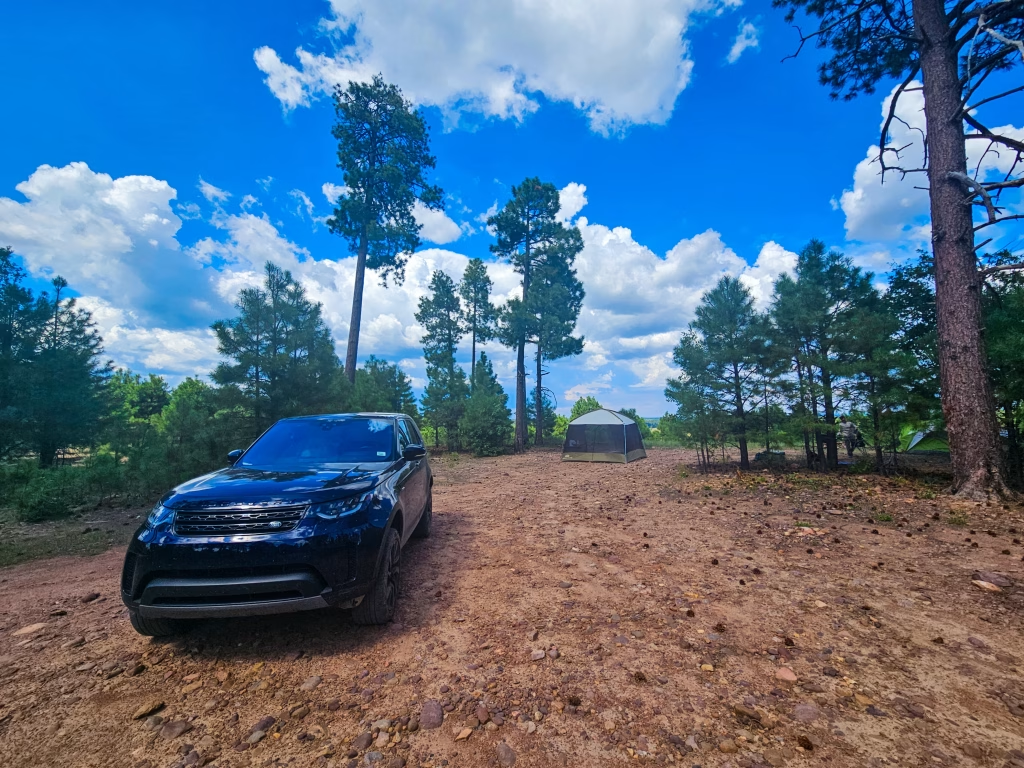
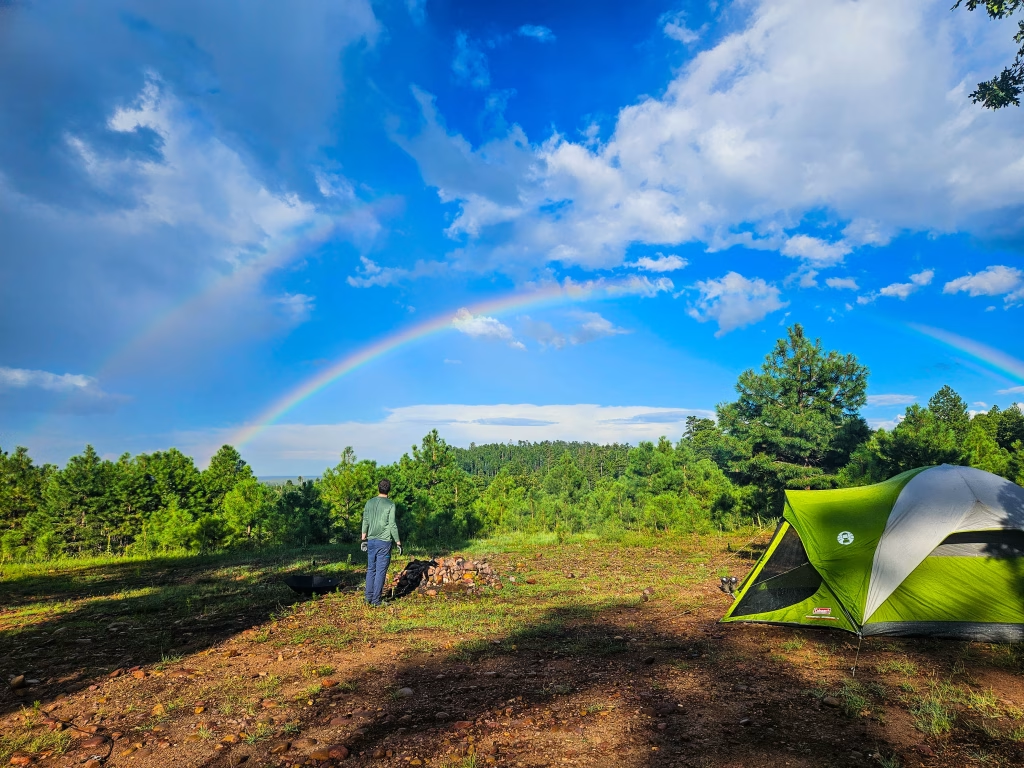
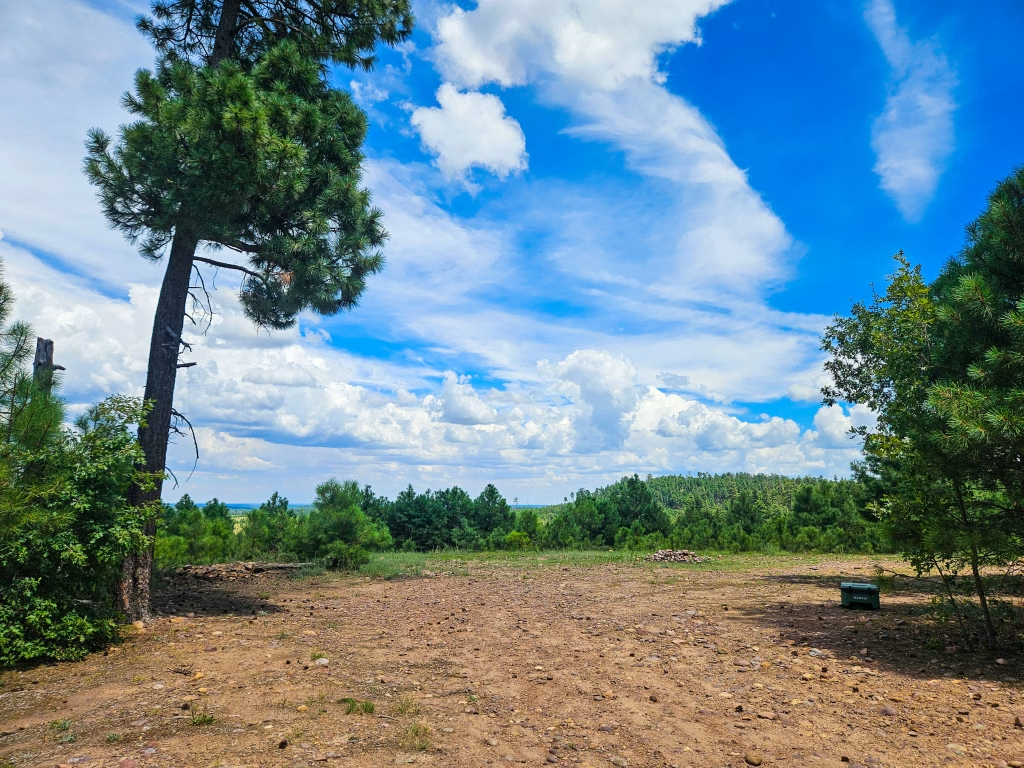
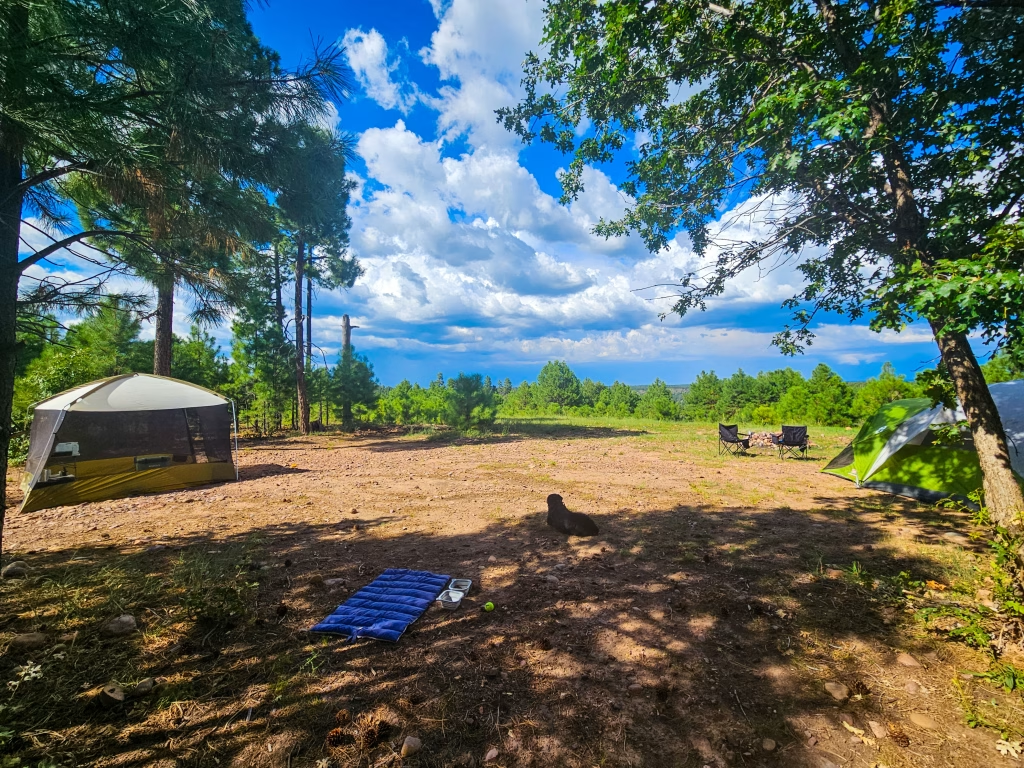
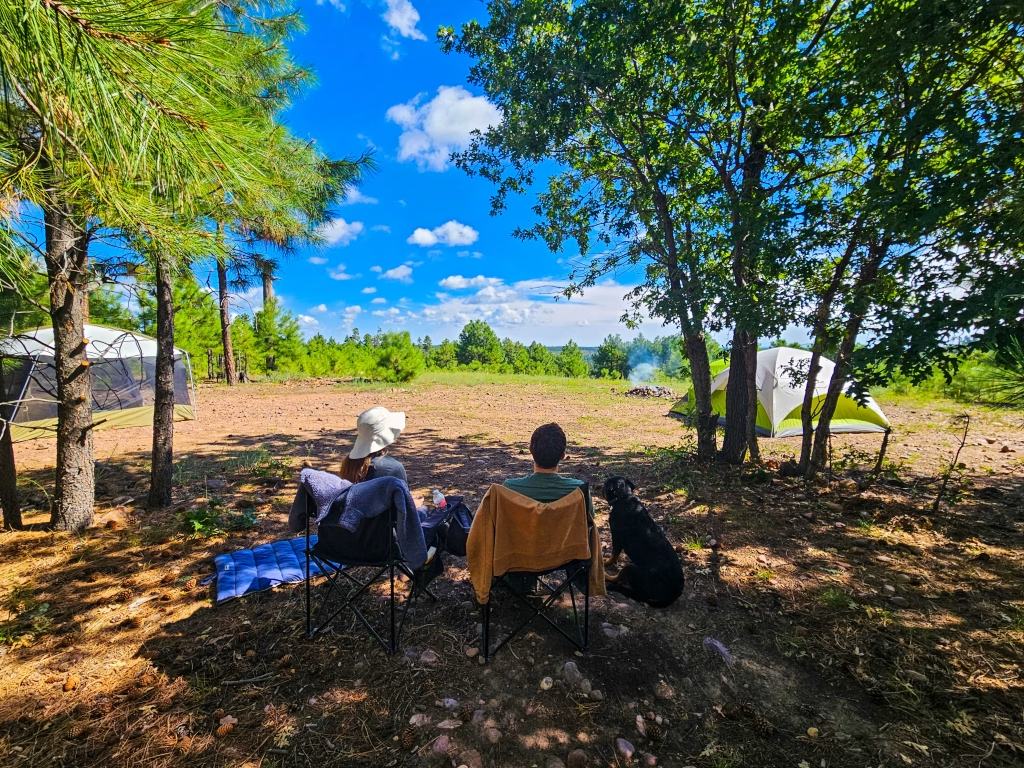
We ended up on a quieter stretch off the Rim Road area, and it was the kind of site that immediately felt worth the extra scouting. It had a huge open clearing with a serene overlook where dense pine forest met the wide horizon of the Rim, but it was still tucked into the trees and set back enough from the road to feel protected and private.
One of the best things about this site was that it still felt spacious without feeling exposed. There was no room for anyone else to reasonably set up nearby, and the whole place had the kind of calm that makes you want to stay put longer than you planned.
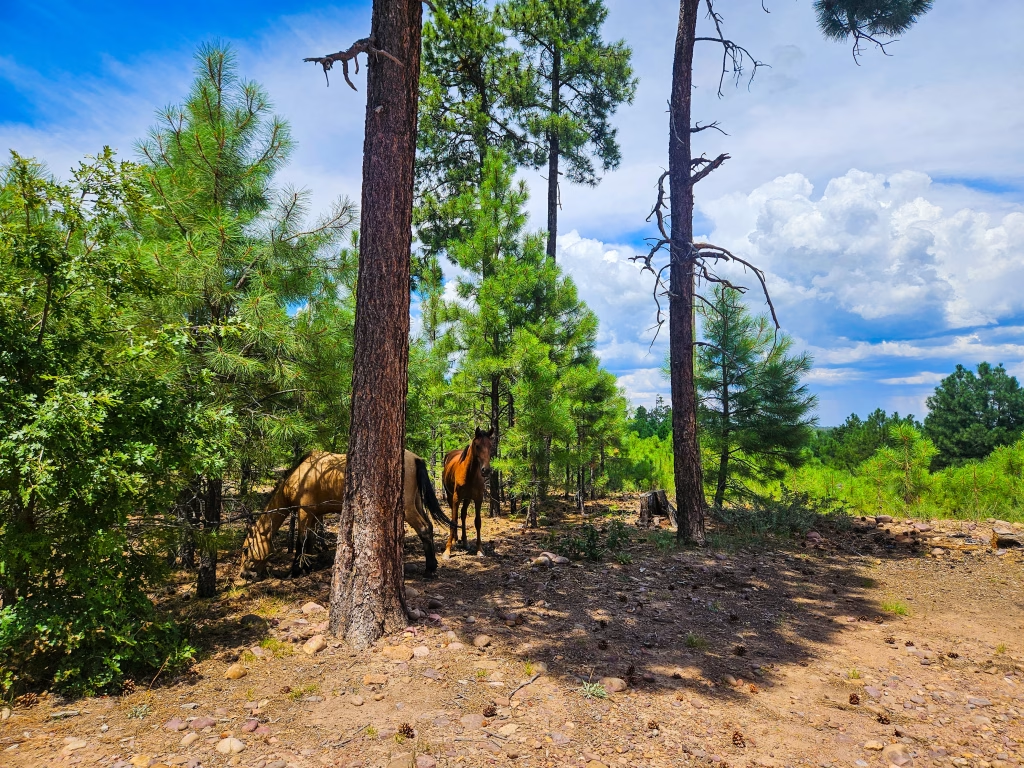
The wild horse visits were the real surprise. We heard noise in the woods not long after arriving, only to realize it was horses moving through the area. They kept coming back throughout the trip and ended up being one of the most memorable parts of the whole experience.
Campsite Coordinates: 34° 17′ 58.9938″ N, 110° 44′ 6.3974″ W
How to Spend a Long Weekend on the Mogollon Rim
The Mogollon Rim works especially well for a trip with a little more built-in variety. Between the campsite, nearby lakes, scenic drives, and hikes, it’s easy to build a long weekend that feels full without ever feeling rushed.
Arrival Day: Settle In and Enjoy Camp
Our first day was mostly about setting up and sinking into the site, which ended up being exactly the right call. The campsite was so peaceful that it felt worth slowing down and enjoying rather than forcing activity on the first evening.
If you want something small to add on arrival day, Black Canyon Lake is a close option worth knowing about, especially since it’s only about 15 minutes away from camp.
Hike Day: Bear Canyon Lake and a Picnic
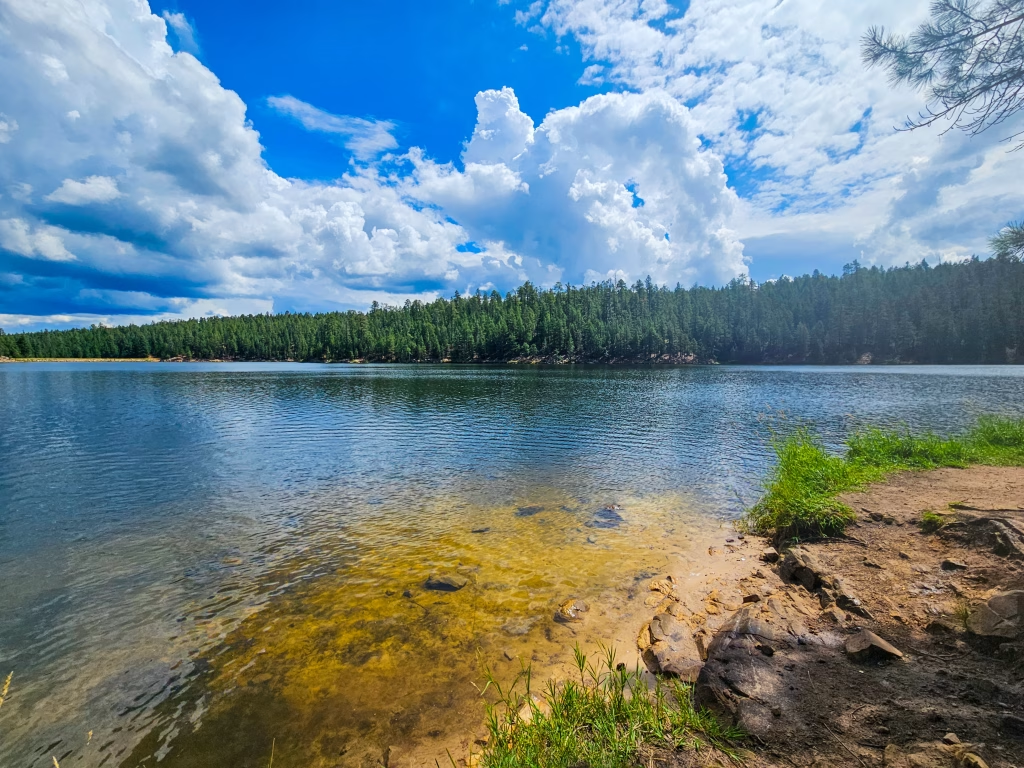
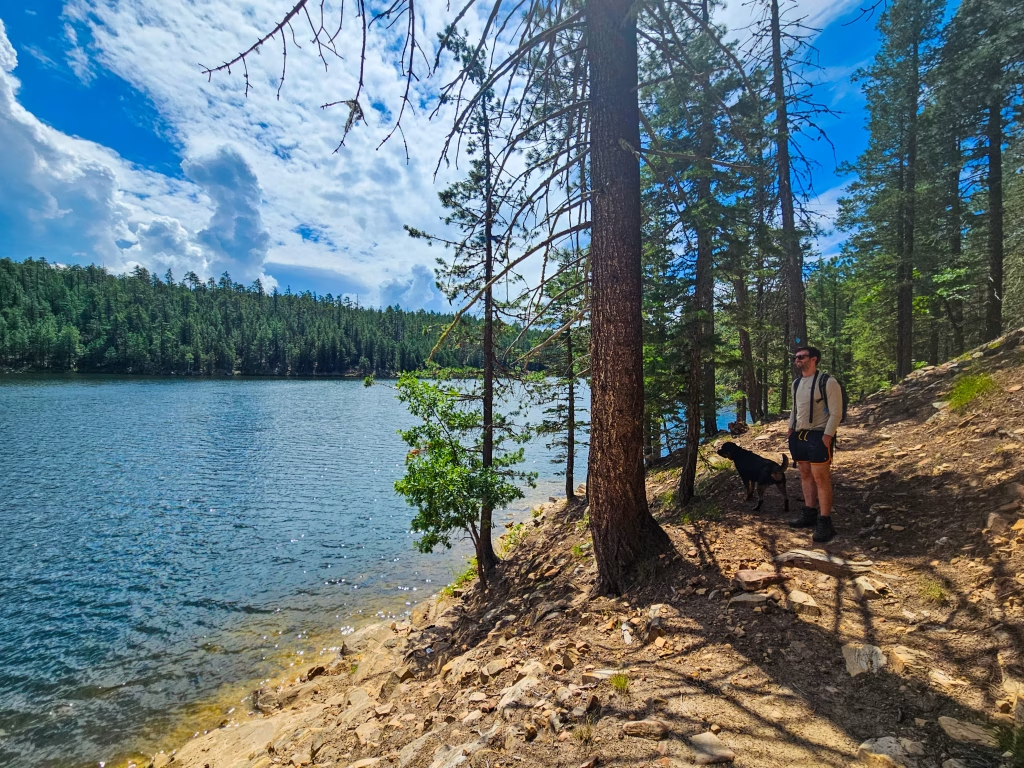
If you want one standout activity for this trip, Bear Canyon Lake Loop Trail is a strong choice. It circles the lake for about 3.2 miles, is dog friendly, and has a meadow at the far end that makes a great picnic stop. It was also one of the least-trafficked hikeable lakes in the area, which made it a particularly good fit for this trip.
GPS Here: Bear Canyon Lake
What made this hike worth it:
• Drive there: about 45 minutes from camp, with scenic overlooks along the way
• Crowds: only three other groups total during my hike
• Scenery: beautiful lake views, forest, meadow picnic area, and osprey nests overhead
• Dog friendly: yes, my dog loved swimming even when it was too chilly for us
Hike tip: If you do this trail, I’d consider treating it as more of an out-and-back to the meadow instead of committing to the full loop. I found the counterclockwise meadow side easier to follow, while the other side turned into a rougher scramble and took longer than expected.
Flexible Day: Scenic Driving or Staying Put
One of the nice things about this trip is that the middle or final full day can go in either direction. You can keep exploring more of Rim Road, take in additional overlooks, and make a scenic drive out of it, or you can use the day to stay at camp, read, relax, play with the dog, and enjoy the site you worked hard to find. The area supports both versions well.
Meals That Work Well for Mogollon Rim Camping
The Mogollon Rim is a great fit for meals that balance practicality with a little more fun. Between the weather, the forest setting, and the longer-trip feel, it works especially well for a mix of easy breakfasts, a good picnic, and campfire dinners that still feel like part of the trip.
Breakfast
Mornings on the Rim work well with either a quick, practical breakfast before a hike or a slower camp breakfast with coffee by the fire:




Lunch
Lunch is a great place to lean into picnic food, especially if you’re building a lake hike or scenic stop into the day:

Dinner
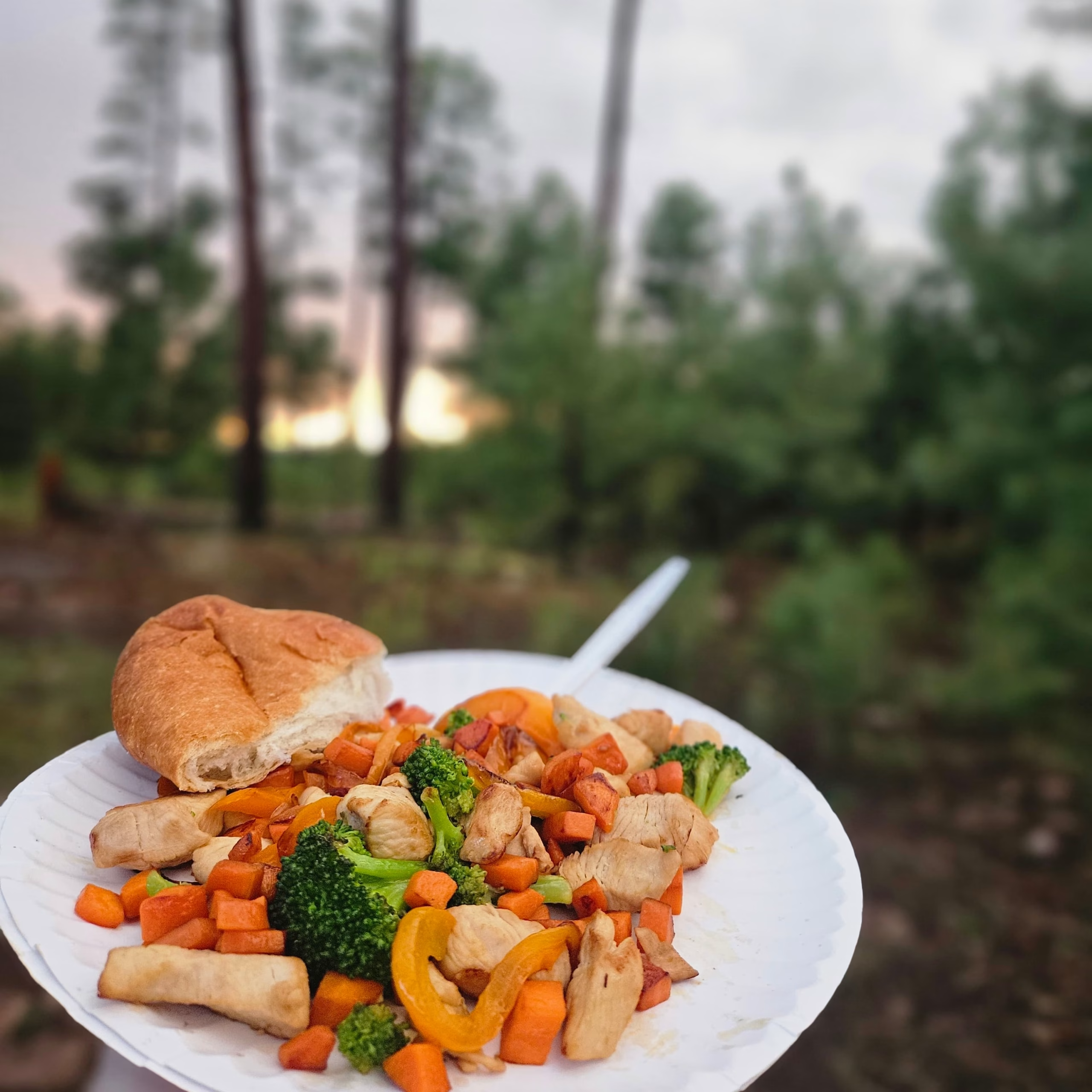
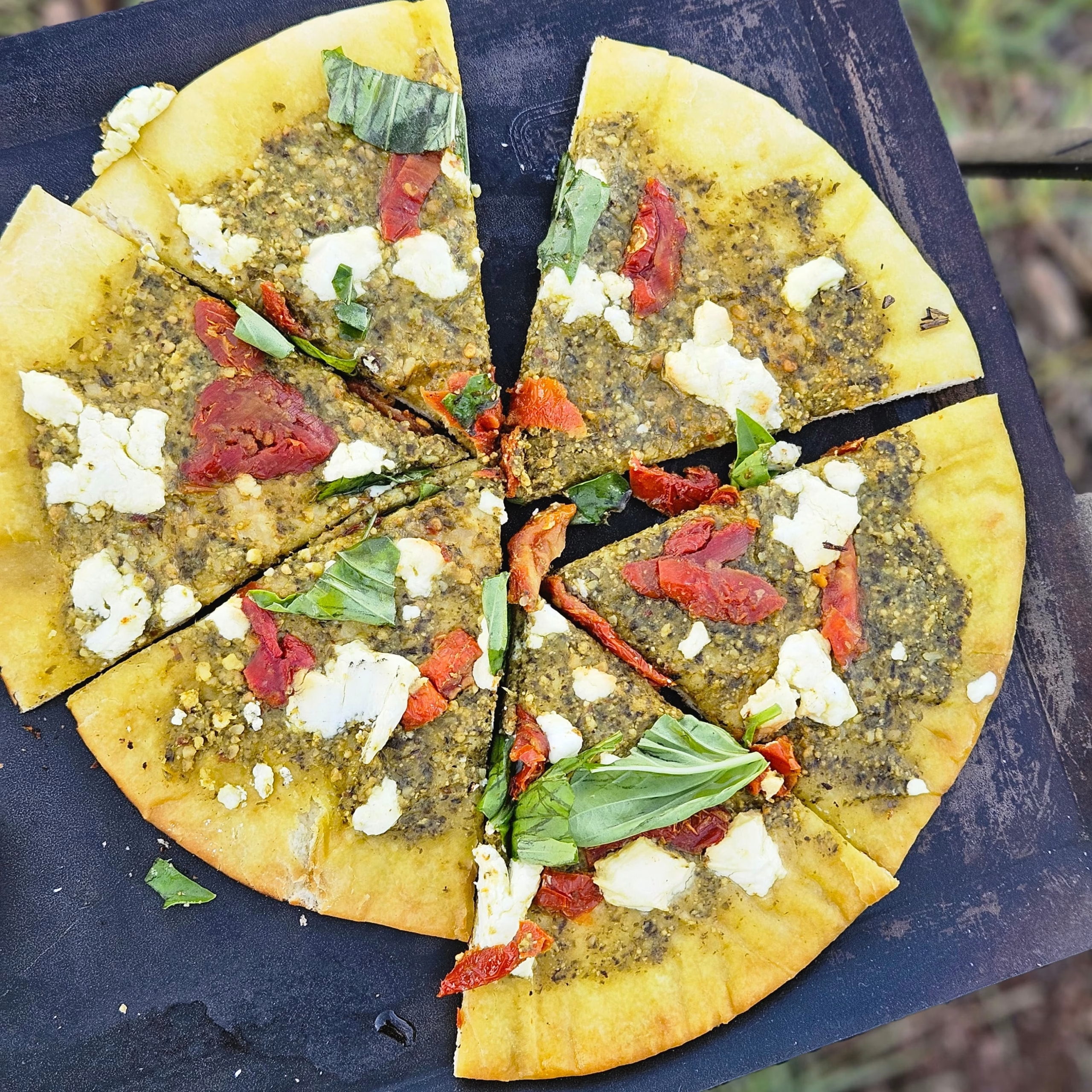
This trip suits campfire dinners well, but the weather also makes it smart to have meals that can pivot to a stove if needed:

Dessert
A dessert here should feel easy and camp-friendly, especially after long evenings by the fire and under the stars:


Drinks
This is also a strong trip for camp cocktails or a relaxed evening drink, especially if you’re spending more of the day at camp or lingering over a scenic stop:


Departure Day: Coffee, a Final Fire, and a Town Stop
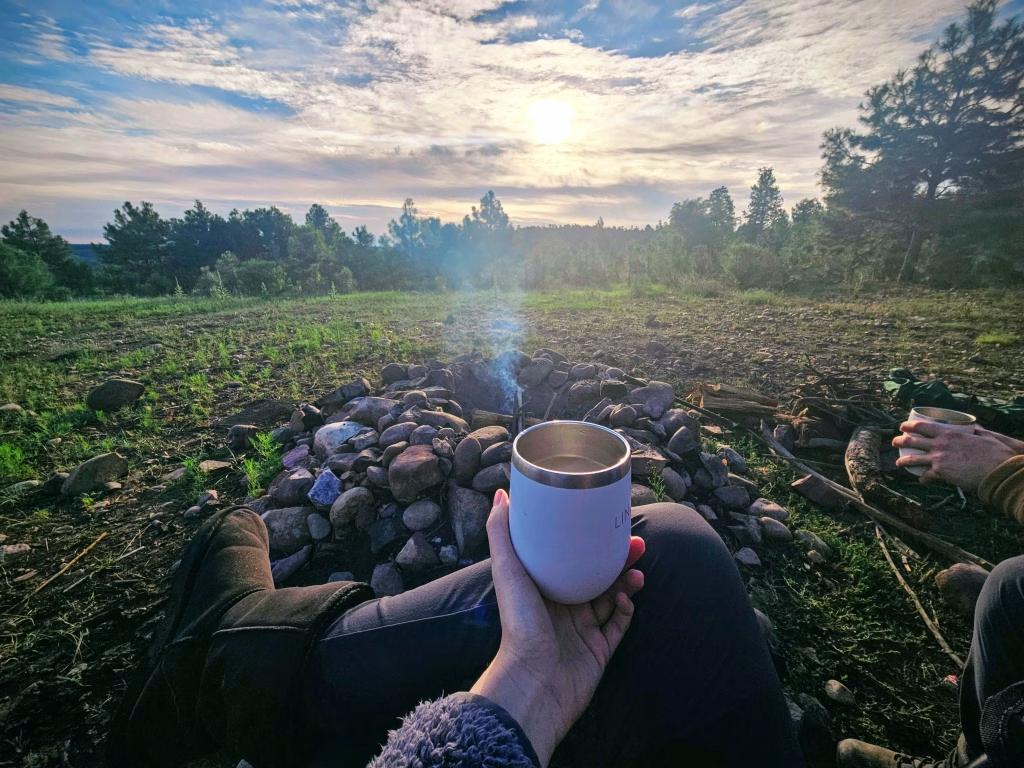
A slower final morning felt right for this trip. We got to enjoy breakfast by the fire before packing up, which made the last morning feel worth savoring instead of rushing through.
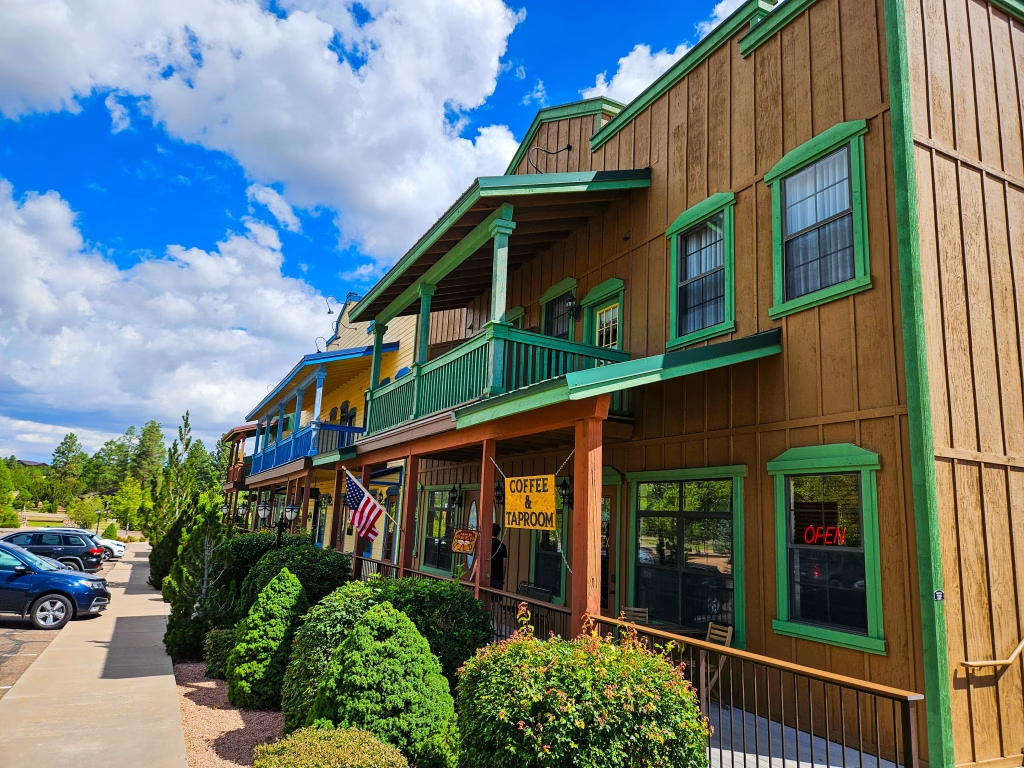
If you want to stretch the trip a little longer on the drive home, Heber-Overgaard makes an easy stop before heading back to Phoenix. We checked out the WorldMark Bison Ranch area first, grabbed iced coffee at AZTEX Coffee and Taproom, and then ended up at The Cabin Bar & Grill, which was a relaxed dog-friendly patio with good casual food and drinks.
If you leave a little later or want another option closer to the drive back, Creekside Tavern in Payson also looked like a good dog-friendly patio stop to try next time.
FAQ : Mogollon Rim Camping
Camping on the Mogollon Rim includes both developed campgrounds and dispersed camping. This guide focuses on dispersed camping in the surrounding national forest areas, where forest roads can lead to more private campsites away from formal campgrounds.
Late spring through early fall (roughly May through September) tends to offer the most comfortable weather for Rim camping, with cooler temperatures at elevation and fewer snow-related closures.
A higher-clearance vehicle is helpful if you want access to more secluded dispersed campsites, but some forest roads and camping areas are still reachable with a standard vehicle.
Cell service is limited to intermittent depending on where you camp, so it’s smart to download offline maps before you go.
Besides camping, the Mogollon Rim area is great for scenic driving, hiking, lake stops, fishing, and wildlife spotting.
Black bears are part of the Mogollon Rim area, so it’s smart to store food, trash, and scented items carefully even if you never see one.
Final Thoughts
Mogollon Rim camping surprised me in the best way. Between the quiet dispersed campsite, big rim views, nearby lakes, the Bear Canyon Lake hike, and even the wild horse visits, it ended up being one of those trips that felt both peaceful and full without ever feeling overplanned.
What makes this area especially appealing is how flexible it is. You can spend more time at camp, build in a hike or a lake stop, or shape the weekend around a mix of both.
If you’re looking for a cooler-weather Arizona camping trip that still feels scenic, spacious, and a little more off the beaten path, the Mogollon Rim deserves a place on your list!
Time for Your Adventure
Have you camped here, or is it on your list? I’d love to hear about your experience or plans in the comments. And if this guide helped you plan your trip, I’d be so grateful if you shared it with a fellow adventurer.
@thedisperseddietitian #thedisperseddietitian
Additional Resources:
If you’re planning more off-grid escapes, these are a few great places to keep exploring next—from another forested Arizona camping guide to make-ahead meal ideas and pre-batched camp cocktails that make outdoor cooking and drinks feel easier and more fun.


Want even more ideas for elevated camping trips, off-grid locations, and food-forward outdoor adventures? Explore the full blog here.